Bullion and Ingot


Quick Tips for the TLDR version
Get to know your local coin shop
Visit multiple coin shops. A good coin shop should be transparent with their prices and should be able to answer your questions to your satisfaction. You should leave knowing more than when you came in.
Buying
When buying precious metals in bullion form, you should be spending less than 7% above the spot price on silver and less than 4% above spot on gold. Keep reading to learn where to look for the current spot price!
Selling
When selling bullion, you should get no less than 10% below spot on silver and no less than 7% below spot on gold regardless of the market. In stable markets, these percentages will shrink to 5% and 3% respectively.
Know your spot prices!
When buying or selling precious metals, you should know the market price for the metal you’re selling. To find the current market price, visit https://kitco.com. This will be your best resource for current spot prices.
Investing
Purchasing gold and silver bullion is a way to invest in a market while being able to hold your investment in your hand instead of just a piece of paper. Gold and silver trend upward in price similar to a good stock. Many people use gold and silver to hedge against the dollar.
Selling in bulk
Rick’s Olde Gold is now offering a 24 hour price lock when you’re looking to sell large amounts of bullion. Just give us a call and we’ll take care of you! *Some exclusions may apply*
Should you invest in bullion?
Do you think you have the Midas touch? I have good news for you. You don’t need any special skills or magical powers to buy and sell precious metals. These tips should help you get started and no purchase is too small, similar to investing in a retirement fund. The best time to start investing in precious metals is 10 years ago. The second best time is today!

COMPOSITION:
What is bullion?
Bullion is non-ferrous metal (commonly gold and silver) in round or bar form that is stamped with the purity, weight and type of metal. Buying bullion is a great way to invest in a market while holding more than just a piece of paper. It’s an investment you can hold!
STANDARDS AND MEASURES:
Common bullion characteristics for trading and reserves.
Bullion can be found in minute fractions of an ounce all the way up to hundreds of ounces per bar or round. Gold bullion is common in sizes ranging from 1 gram bars to 1 ounce bars and rounds. Silver is most commonly found in sizes ranging from 1 ounce rounds or bars up to 100 ounce bars.

AUTHENTICATION:
Verification of bullion assets.
In today’s market with prices rising to unheard of levels, counterfeit bullion is on the rise. The best way to make sure you end up with the real deal is to form a relationship with your local coin shop and make sure they have a way to test the purity and authenticity of the bullion being sold including using a Sigma tester or XRF scanner.

Bullion Knowledge
Useful and interesting things to know about bullion and ingot.
The world's largest gold bar weighs in at 250 kg (8,038 ozt), with physical dimensions equal to size of the average house-cat. Manufactured by the Mitsubishi Materials Corp, on the 11th July 2005. Its gold content was valued in 2005 at 400 million yen or US$3.6M at the time. As of January 2023, it is worth approximately US$15.1 million.
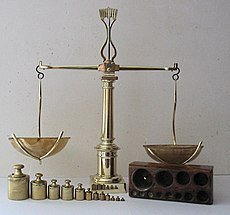
Gold and silver are measured in troy ounces. One troy ounce is equivalent to 31.1034768 grams. The troy ounce is heavier than the avoirdupois ounce, the United States system used with food and other goods. One avoirdupois ounce equals 28.349523125 grams.
Diversification of assets outside of issued currencies. Precious metals can be exchanged for the native currency in every country of the world.
The premium on gold and ingot and bullion should be a low percentage over the spot value of the gold, making it ideal for small transfers between banks and traders. This is something seasoned and competent traders know.
Spot prices can be found at kitco.com, prices of which are derived from the London Bullion Market Association

History and Facts
Interesting facts and history of gold in human civilizations.
The first gold coins were produced in Lydia between 700 - 650 BC. They were made from electrum, which is a naturally occurring alloy of gold and silver.
Almost all of the gold discovered today did not originate on Earth. Instead, it came from meteorites that hit our planet 200 million years after it was formed.
Australian scientists discovered that Eucalyptus leaves contain gold.
Traces of gold can be found in human body in several different places. These include heart, brain, blood, and our joints.
A one-ounce nugget of gold is more difficult to find than a five-carat diamond.
Even at only 10 parts of gold per quadrillion, the world’s oceans are estimated to hold up to 15,000 tonnes of gold.
One gram of gold can be flattened down to a square meter sheet, which is so thin that light passes through, and because of this it has been used as a protective film on visors in space suits.
Odorless and tasteless, gold is not toxic - and flakes may be eaten in foods or drinks.
Gold is far rarer than diamonds but is only the 58th rarest earth element.

